



More control over light. More freedom with focus. New possibilities for the lenses you already own.
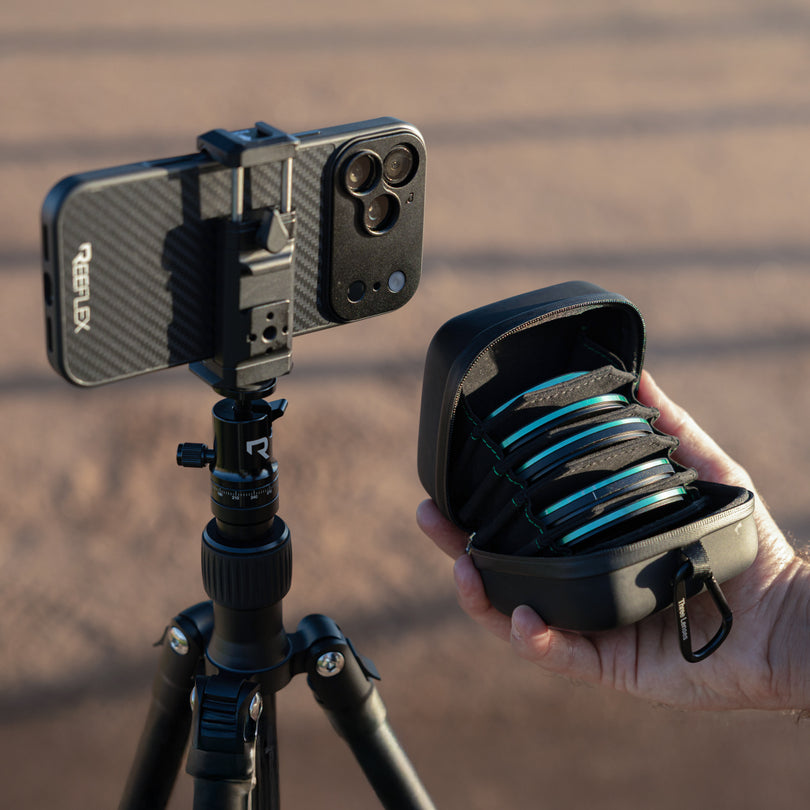
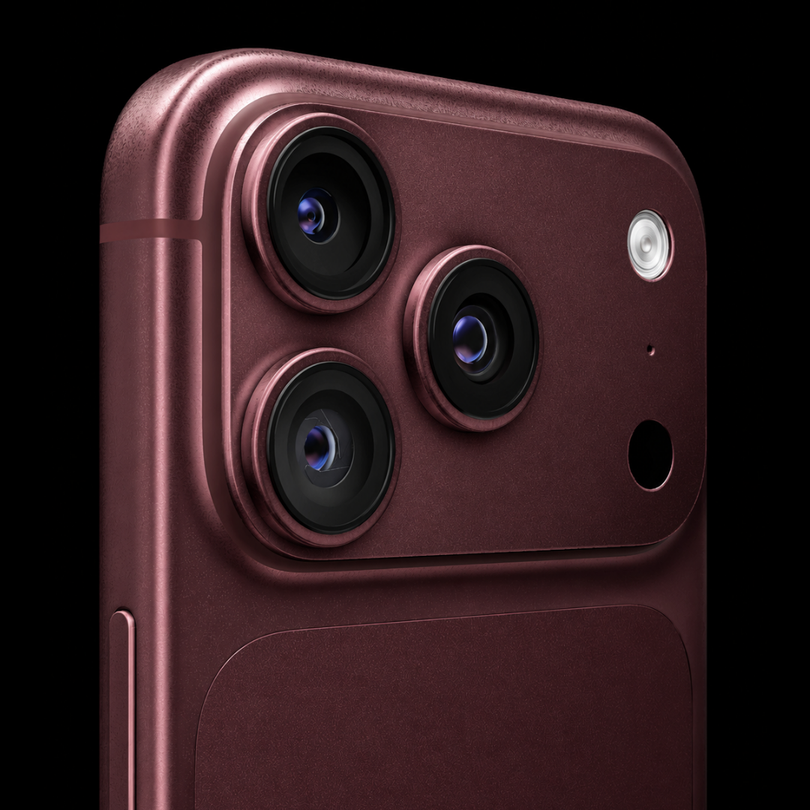
The variable aperture on iPhone 18 Pro and Pro Max adds a powerful photographic tool to the main camera. For REEFLEX users, it also opens up new ways to work with G-Series lenses: from stronger subject separation to more consistent detail and greater depth of field in macro photography.
Following our optical tests, we confirm full G-Series compatibility with both models when paired with the dedicated REEFLEX case. Here is what changes and how to make the most of it.

What is variable aperture?
The aperture is the opening that regulates light passing through the lens to the sensor. A variable aperture changes its physical size, giving you control over both light intake and depth of field: the range of distances that appear acceptably sharp.
Its size is expressed as an f-number: the lens focal length divided by the diameter of its entrance pupil, or apparent opening. A smaller f-number means a wider opening. At f/1.48, the camera admits more light; at f/4, the opening is smaller and depth of field increases, with other shooting conditions unchanged.

A mechanical iris, built into the main camera
Apple uses six laser-cut blades driven by a rotor mechanism to form a miniature iris. The blades move together to enlarge or narrow the opening, while the lens elements focus light onto the sensor. The main camera offers automatic adjustment and manual aperture control, spanning f/1.48 to f/4. Explore Apple’s camera announcement.
This adjustment changes the optics during capture. Portrait-mode depth controls, by comparison, adjust computational blur. The variable iris is part of the main camera; the native telephoto camera remains a separate optical system.

From f/1.48 to f/4: what changes?
- Light intake: a wider aperture admits more light during the same exposure, helping you maintain a faster shutter speed or lower ISO in dim conditions.
- Background blur: at the same focal length and focus distance, a wider aperture produces shallower depth of field. Background distance and magnification also influence how strongly the subject stands out.
- Depth of field: stopping down keeps a greater range of subject distances acceptably sharp useful for close-ups, objects with depth and layered compositions.
- Optical rendering: stopping down can reduce some aberrations and improve detail across the frame. Smaller apertures also increase diffraction, so the best setting balances sharpness, depth of field and light.
The practical trade-off: f/4 requires more exposure than f/1.48. Depending on the scene, compensate with a slower shutter speed, higher ISO or additional lighting. With moving subjects, keep an eye on shutter speed.
G-Series: familiar lenses, greater flexibility
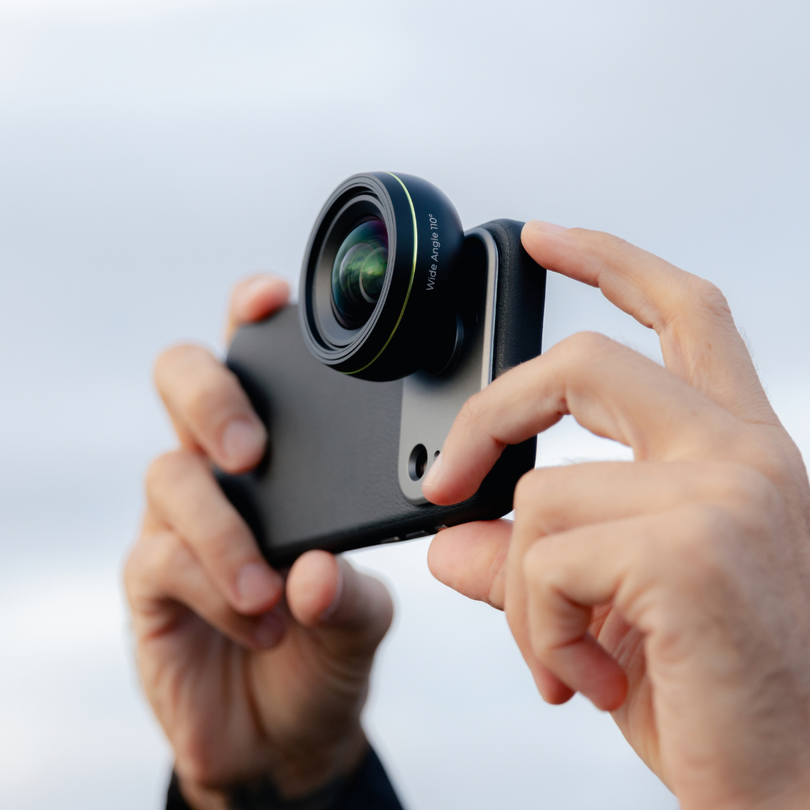
G-Series lenses amplify the creative effects and practical benefits of the iPhone’s variable aperture. By expanding the main camera’s optical capabilities, they make changes in background blur, depth of field and image sharpness more apparent in the setups we tested, giving you greater flexibility to shape each shot.
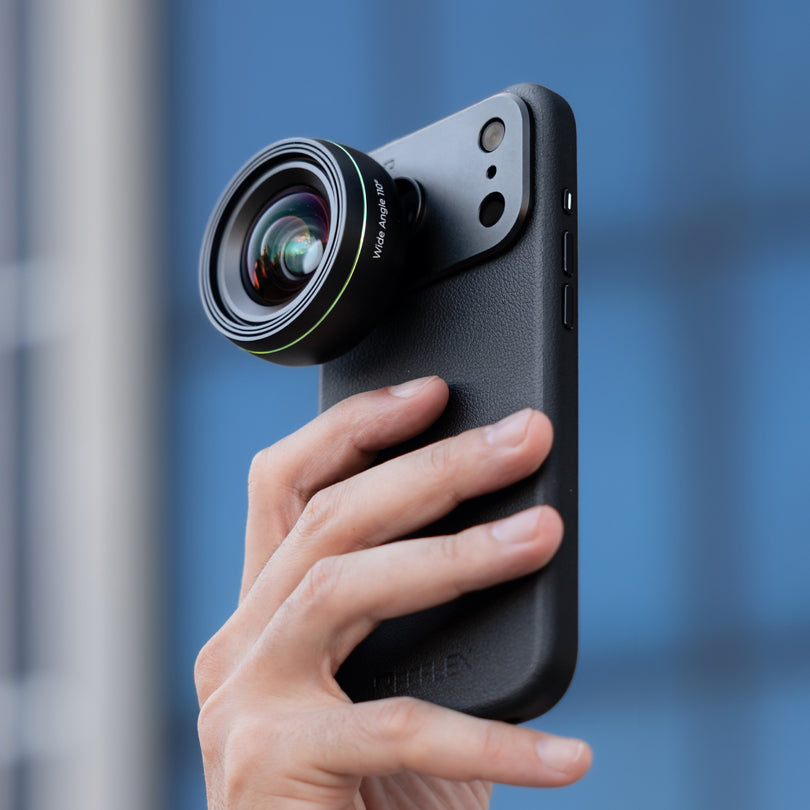
Our tests with the Telephoto 2x, Wide Angle 110°, G-Series Fisheye and Anamorphic 1.33x revealed how this interaction opens up new creative possibilities across the aperture range.
At f/1.48, we observed more pronounced background blur in our test scenes, with the strongest sharpness concentrated toward the centre. Stopping down toward f/4 produced noticeably more consistent sharpness across the image in the combinations tested.
Depth of field and centre-to-edge sharpness are distinct: one concerns subject distance; the other concerns detail across the frame. Together, these changes give you more freedom to choose between selective focus and broader image clarity while exploring different optical views.
The comparisons below show iPhone 17 Pro Max on the left and iPhone 18 Pro Max on the right. They illustrate the results of the complete setups; differences between phone generations can also involve the sensor and image processing.
| G-Series lens | iPhone 17 Pro Max | iPhone 18 Pro Max |
|---|---|---|
| Telephoto 2x | ||
| Wide Angle 110° | ||
| G-Series Fisheye | ||
| Anamorphic 1.33x |


Tap an image to open the full comparison.
Macro: more of the detail you came to capture
The benefits become especially useful with the Macro 10x and Long Range Macro 75mm. At high magnification, depth of field is naturally shallow: a small change in position can move an important feature outside the sharp zone.
In our aperture tests, f/4 improved overall sharpness and kept more of the subject in acceptable focus. This makes it easier to reveal a flower’s structure, capture surface texture or compose around a small object with depth. Open the aperture when isolating a single detail is the creative priority.
| G-Series lens | iPhone 17 Pro Max | iPhone 18 Pro Max |
|---|---|---|
| Macro 10x | ||
| Long Range Macro 75mm |


Tap an image to open the full comparison.
Why the dedicated iPhone 18 case matters
Optical performance depends on precise alignment and spacing. Our assessment of the updated camera geometry identified increased camera protrusion, which our iPhone 18 Pro and Pro Max cases account for in their lens-mount design.
Although the phones physically fit their respective iPhone 17 cases, those mounts are not optimised for the new geometry. Small positioning differences can affect image quality, particularly toward the edges. Use the dedicated case for your model to achieve the intended G-Series performance.
Explore the iPhone 18 Pro G-Series Leather MagSafe Case →

Full performance for your long-range favourites
The Ultra Telephoto 300-600mm and Super Telephoto 240mm, including their Macro Add-Ons, retain full compatibility and performance in our tests. They work with the unchanged native telephoto camera, so the main camera’s variable-aperture benefits do not apply to these combinations.
Choose your lens for the view. Choose your aperture for the depth and rendering. Your G-Series kit is ready to explore both.